Thursday, November 28, 2019

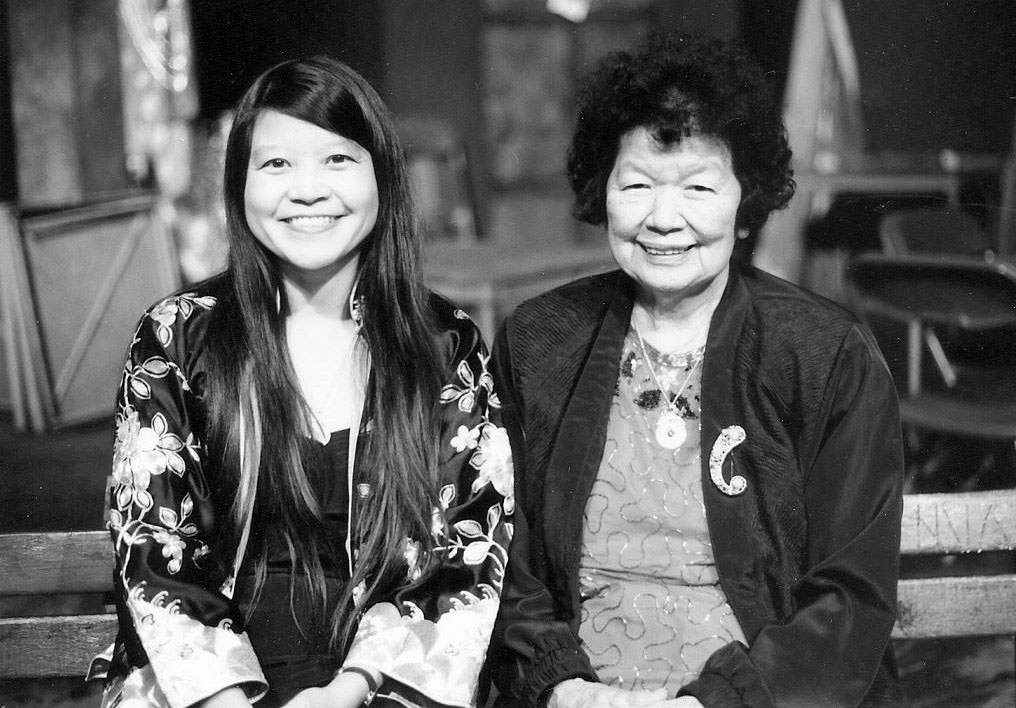
Cherylene Lee

I didn't know that there was another Asian "prodigy" around the same time that Ginny Tiu made her first mark. But, yes, as I just learned there was another prodigy--Cherylene Lee. No, she wasn't a piano prodigy, but dancing and singing was her forte. She appeared on various TV shows, including Gene Kelly's, and performed in Las Vegas as part of the sister act, the Lee Sisters. Here she is, with Gene Kelly, and then Dinah Shore and then the DENNIS THE MENACE show:


After a number of TV shows and appearances in feature films, her career seemed to stop. But she kept on going, however, becoming a writer and screenwriter, and doing some TV work, too, like voicing two parts in Hanna-Barbera kid's cartoon THE AMAZING CHAN AND THE CHAN CLAN.

One of Lee's plays, ARTHUR AND LEILA, was performed by Nancy Kwan and Dana Lee:


Lee also wrote a play about the Vincent Chin tragedy:


She wrote an autobiography, JUST LIKE REALLY. Here she is talking about her autobiography and career.


She started two Facebooks in late 2015, too. Sadly, she died not long thereafter, but the Facebook pages are still active.

*     *     *

Cherylene and her mom


Monday, November 18, 2019

HONG KONG - The TV Show with Rod Taylor


Despite the publicity that nowadays we are finally seeing Asian Americans on television and in the movie theaters, this is just publicity and, basically, untruthful. There were times when Asian Americans, and in particular, Asian females, were in demand on the small and big screen. One could say, and there are facts that prove this, that Asians and Asians were more popular in "the old days" than they are now. After all, the first and thus far the only Asian to win an Academy award was Miyoshi Umeki for her performance in the 1957 film, SAYONARA.

HONG KONG was one of the shows on television that had a focus on Asia and Asians. There were various TV shows that had an Oriental flavor. The South Seas (not in Asia but close to it) had ADVENTURES IN PARADISE. Two episodes even had the legendary Chinese-American actress Anna May Wong. Periodically, TV shows needed Asians for guest roles or visual atmosphere. And the old standby, Charlie Chan, had a TV show. Actresses who benefited from this entertainment environment were many, including Lisa Lu, France Nuyen, Anita Loo, etc. It was a time when if you were Asian, you were "in demand." I SPY started its season with exteriors filmed in Hong Kong. Later on, TV shows like HAWAII FIVE-O and KUNG FU kept the visibility prominent of Asians. And there was STAR TREK, of course, which had various ethnicities in its cast, including George Takei as Sulu, a helmsman of the Starship Enterprise.

HONG KONG, the TV show, was filmed in black-and-white, and initially was going to be only 30 minutes, but it was determined that 60-minutes would be better against the highly-rated show, WAGON TRAIN, which would be its competition.

Taylor played Glenn Evans, a reporter whose beat was the exotic and adventurous British colony, Hong Kong. The Fox show had a cadre of Fox contract players, like France Nuyen who played "Happy" and may have been back in another season. The show tried to tweak itself to change its ratings that were not promising. One episode even has the musical prodigy, the child Ginny Tiu, who, at the end of the episode, plays on a piano to the surrounding cast members.

Taylor spoke about his show when it was starting out. "I had turned down 25 offers to do a TV series, but when this one came along, it sounded like something I could do with real integrity, as well as making a bit of money for myself."

Taylor owned 15% of the show and received a $3750 per episode, at that time a sizable figure. There was a gritty honesty to the show, and an attempt to stay away from the cliched plot and dialog of a Fu Manchu and Charlie Chan film, though gun play and fisticuffs had to be in there for action fans. Not a problem for Taylor. Taylor loved doing most of his own stunts and was not afraid of getting mussed up, if needed.

Three weeks location shooting in Hong Kong were used for background shots for the series, and the rest was shot in the Fox studios in Hollywood, where sets were designed with a Hong Kong look.

As promising as the show was, and as much effort that had been put into the series, the show failed to capture a sizeable audience that would justify its costly expenditure. It was canceled after 26 episodes. Despite this cancellation, there was talk of bringing the series back after a public outcry. But when the new show finally materialized, it was left in the vaults. The new show was titled DATELINE: SAN FRANCISCO, and the name of the character was different, possibly because it was made for Universal and not Fox.

As for the series, HONG KONG, it increases in reputation, though few of the current public know about the show at this point. The Fox vault may hold the key if they release the show in the best quality possible, and finally the public will have an opportunity to see the series like they've never seen it before.

 Rod Taylor with Mai Tai Sing

 The musical prodigy, Ginny Tiu, also appeared in the show.


Rod Taylor fans may be interested in The Complete Rod Taylor Site.

Monday, November 11, 2019

The World of Tsai Chin


Yes, there is a Hong Kong singer called Tsai Chin, but I want to write and copy text about the other Tsai Chin. Oh, now she is very stately actress with a flavorful resume, a lauded autobiography, and her new film, LUCKY GRANDMA. Tsai Chin has an entertainment history that goes way back. She is the first Asian "Bond girl" for her brief role as Ling at the beginning of YOU ONLY LIVE TWICE, where she shared a bed with Sean Connery, who was playing Bond in his fifth film.


Bond: "Why do Chinese girls taste different from all other girls?"

Ling: "You think we better, eh?"

Bond: "No, just different. Like Peking duck is different from Russian caviar." (Personal aside, the opportunities for me to use this line are dwindling fast.)

After promising the best duck (ha, ha), Tsai Chin packs him off to be executed on the bed by two charging men holding machine guns. Of course, it is just a ruse....


Tsai Chin was back in a Bond film years later, but Connery wasn't.

Around that YOU ONLY LIVE TWICE time, Tsai Chin made five appearances as Lin Tang, the daughter of Fu Manchu. If you heard, "A favor, father," you were in trouble.


But Bond, or Fu Manchu, or her appearances in other films, like THE JOY LUCK CLUB, are not the subject of this blog. In part, the music feats of Tsai Chin is the main subject of this blog.

I can't really afford what is offered on eBay (besides, I don't have a record player), but I have a researcher's interest in her hit single and subsequent two albums, one of whose back copy text is rendered here. She had an international hit with "The Ding Dong Song." Remarkably, it was a familiar and beloved song to many at the time, though for me its appeal is not frequent listenings. Perhaps even to Tsai Chin, too.


The song was part the British stage production of THE WORLD OF SUZIE WONG, which featured Tsai Chin in the starring role as Suzie Wong. Afterward, Tsai made two albums: THE WORLD OF TSAI CHIN and THE WESTERN WORLD OF TSAI CHIN.

Since the eBay photo is small and this listing can disappear, let me write what is said about her in the back of her first album written by the album's producer, Hugh Mandl. British grammar has been kept.

**********

'Mr. Wong.
How are you?
It's a braw bricht moonlicht nicht the nicht."

In this quotation--ripped untimely from the singer's repertoire--can be seen all the dilemma of being Tsai Chin.

Not that she is aware of any dilemma. If she does examine herself--and every serious actress, however delicious, has to do so sometimes--it is probably only to laugh at what she finds.

And that is where the dilemma lies, for she must know that there is more to her complex character than she admits.

There is charm and warmth and innocence--and there is an enchanting sense of humour which is never malicious. There is also a tremendous wisdom and a dedication to the job in hand which you will only find with completely professional actors. 

Tsai Chin was born in China--in a trunk, for her father was one of that country's greatest actors. She came to England to train at RADA, where she won no prizes at all. "I supposed I was lazy," she says. She lives in London--in Battersea where she has bought a Victorian house on which she is lavishing considerable skill in decorating.

She beguiled several thousand people as Suzie Wong during the two-year run of 'The World of...', and several thousands more with her record of 'The Ding Dong Song', which Lionel Bart cooked up for her, and which became an international hit.

Making this album has taken Tsai Chin six months, working very hard and sometimes very seriously. Often, late at night, her musical director, Harry Robinson, and I have wanted to go home and sleep--but every time we've been bewitched by her into working just a little longer.

We have been touched by her sweetness, impressed by her erudition, shamed by her humility and beguiled by her elfin humour.

We have also been brought near to bankruptcy by her appetite. She is always hungry--and of course there is always an enslaved male to pay for a meal. One afternoon at 4 o'clock, a recording session was interrupted while the star had tea. She ate roast lamb, new potatoes and runner beans. Then she ate a poached egg--on toast--and followed this up with a large Viennese cake. Two cups of coffee and a scrounged cigarette, and she was ready to go back to work.

Yet she's as small and frail and graceful as you could wish, and her subtle mixture of pride and humility are an object lesson to any western performer.

We've tried to convey a little of all the different sides to Tsai Chin's character in this record, only excluding this hunger. 

Come to think of it--'I'd 've baked a cake' gives a clue to that, too.


Monday, October 14, 2019

Confessions of an Opium Eater (Souls for Sale)


It started out very promisingly. Around 1958, journeyman director William Castle was associated with the film, having MACABRE behind him and having just completed HOUSE ON HAUNTED HILL. Castle was finally seeing a new career in horror pictures as a producer/director recognized for his showman gimmicks. The film was also going to be in color. Shot in Japan. And would have SAYONARA's Miiko Taka as the female lead. Reports were that Castle was leaving for Japan to set up the filming, the biggest of his career. But all these hoped-for realities disappeared rather quickly.  As the film evolved behind the scenes, the producer and director was now Albert Zugsmith, another journeyman. At this early point, Zugsmith offered Cary Grant the leading role for 25,000 dollars for a day's work. Grant did not bite. It was time to drop the highfalutin ideals and look at reality. A film needed to be made.

Actor Vincent Price was becoming a big name in the horror field. His growing list of horror films became cemented with an involvement with Roger Corman, who was making films, cheaply but expertly, for his company, and disturbed by American International Pictures. So the male lead became Vincent Price. The film company was Allied Artists who had been...Monogram Pictures. Allied was distributed by AIP. Corman was also involved with Allied.

CONFESSIONS OF AN OPIUM EATER had a topical story for then-current Asian fixation in movies and on television. The title was exploitative, and the film was full of attractive and exotic women who could be used in trailers and ads. Even with the budget constants, the film seemed like a sure hit. It was high on my list of seeing. After all, I was writing a book on Asian-American actresses, and they were several in this film. (One Asian-American actress refused, as she felt the subject would have torpedoed her with the Chinese community. The focus was now on San Fransisco's Chinatown, and Japan is not mentioned anymore.)

Having just seen the film in WB's Archive Collection, with its impressive picture quality, my impression was that this film was one of the worst I have seen, if not the worst. There are so many things wrong with it, that not all the points will be mentioned, but let's try--at least with the major points. I tend not to laugh at a film, but this one begged not to laughed at. We dare you, the filmmakers seemed to say. The film's title was considered not exploitative enough, so a year later, it was sold as SOULS FOR SALE.

Vincent Price is woefully miscast. He may have a wonderful voice, and may be perfect for his smarmy, cruel horror stories, but as a male lead who is supposed to be tough and blustering, he misses the mark completely. At his best moments, he looks like Richard Boone, but those moments are in shadow, and Price is not speaking in his recognizable voice. To see him fighting with bare fists and hanging onto a cage for dear life is jarring. One sequence has him hanging from a hook like some butchered meat, but he continues talking nicely to his persecutors, his feet dangling in the air. No, this is not an episode of THE WILD, WILD WEST, and Price is not Robert Conrad.

The script. The film has a great beginning and a great end, but in between another film seems to be showcased. The dialogue comes across as Charlie Chan euphemisms that even Chan on his worst days would not use. Is the ripping-off of actual words used by De Quincey in his by-now classic book? I would assume so, at least partially, but never having read the book, I don't know.

The old love affair between the characters played by Vincent Price and Linda Ho should have more feeling and depth. Ho, her first film, gets a lot of camera watchfulness. In one scene she is looking into the camera, the attention focused on her face for a long period of screen time, as she talks to Price.


The midget. Yes, there is a midget. Actress/singer Yvonne Moray. She has a reputation. Good for her. She plays a midget Asian who can provide a good time to foreigners. She is thought of as a child, but upon closer look (is one really needed?) she is much, much older. And in a cage....

The cage, or rather, the cages. Good for their exploitation uses on female captives and the film's visual promotion, but when Price is imprisoned in one and travels inside his cage that acts like a runaway subway, the cage becomes ridiculous visually. But it may be just Price inside the cage or hanging from it.... I can't imagine Cary Grant dangling from a cage or speaking with a cake-faced middle-aged midget who is hawking a happy-ending massage. Well, maybe I can see Cary conversing with her if we are talking about a screwball comedy from the 1930s.

Then there is the Asian woman who is actually bald and the squawking over her at the auction when her wig is pulled... And there is a silent, slow-mo lengthy sequence that will leave you befuddled into thinking you are in a time-machine watching a Jess Franco film with Lina Romay... And more. Much more.


There are some good moments. The beginning is particularly effective: the herding of Asian women and their fear, even rebellion at the fate that awaits them in the new land. And the acting by Korean-born June Kim (now June Kyoto Lu) as the perpetually frightened Lotus is very good. And one can tell that the Asian American veterans are having a good time. Veterans like Philip Ahn, Richard Loo, John Fujioka. The film is not anti-Asian, as felt by some, unless any mention of opium and tongs is a no-no, as is any entertainment depiction of Asians unless the depiction is teachable, according to a current agenda, as mocking and cruel toward Asians.

Somewhere there is a very good film, even with the exploitative moments, but it is not this one.


Thursday, October 10, 2019

Yoko Matsuyama

A nice shot of actress Yoko Matsuyama. She did four "blind swordswoman" films, or the Crimson Bat films. Her name in the films was Oichi, a takeoff on Zatoichi, the blind swordsman. While the character is Japanese, the Chinese also used a blind swordswoman in some of their films.


The films received play in Hawaii and at least in California, but only with English subtitles. An English language trailer exists for one of the films:


Apparently these were dubbed in English, and a Blu-Ray of the first film, with supposedly English dubbing, was released in Germany in 2016, but whether the film or films played with English dubbing anywhere is unknown right now.

Saturday, September 28, 2019

The Chinese Art of Decluttering and Organizing

Marie Kondo wasn't there first with her mega-bestselling THE LIFE-CHANGING MAGIC OF TIDYING UP: THE JAPANESE ART OF DECLUTTERING AND ORGANIZING--and TV show and modern celebrity. Anna May Wong was doing the same thing decades ago. Yes, Anna May Wong offered this advice in an article she wrote in 1939, "Why Waste Your Time?" We could call it, THE CHINESE ART OF DECLUTTERING AND ORGANIZING. Here is the beginning part of it:


Thursday, September 26, 2019

Nancy Kwan...and eBay

This post is not really about Nancy Kwan but rather about certain eBay dealers. And it is not just Nancy Kwan, but many of the other photos I look at.

I need photos for a few reasons, one of which is that my book and magazine needs photos. I try to select photos that visually appeal to me, and that others would like to see. Having looked at many, I sometimes wonder at the prices a dealer sets. For many of these photos, the interest is passing, if that. Yet occasionally the dealer sets a price that is way too high. Of course, the photos do not sell, and just "sit there."

I understand the value of certain things, and I understand that a dealer can set any price that he or she wants. But...just to have a photo sit there with no movement from bidders? Again and again and again...

This leads me to a photo on eBay I received yesterday. It was reasonably priced, and even had Ms. Kwan's autograph on it. Apparently she is or was doing shows on the West Coast, and signed this and other photos. I bid on the photo because 1) I've never seen it, and 2) I thought it was an exceptional shot of Ms. Kwan. (And, yes, she does have freckles.)

Nancy Kwan is important for various reasons, one of which is that in certain photos she represents the post-Anna May Wong actress for an Asian (actually, she is half-Asian)....

The photo:

Looks Familiar

Something about the face. Could this be the future "Blind Swordswoman" of four later films-- Yoko Matsuyama? The link will tell yo...